
Clearing That Protects Slope Stability
Land Clearing in Missouri for wooded hillside lots before construction or farming
Selective tree removal preserves root systems on slopes to prevent erosion before grading begins. Tim's Excavation and Contracting LLC provides selective and full land clearing for wooded, brushy, or debris-covered properties across Missouri, working with natural contours to protect drainage and soil stability.
Land clearing removes trees, brush, stumps, and debris while strategically leaving key root structures where needed to anchor sloped ground until construction begins.
Request a site evaluation to determine the ideal clearing plan and timeline for your property.
What You Notice Once Clearing Is Finished
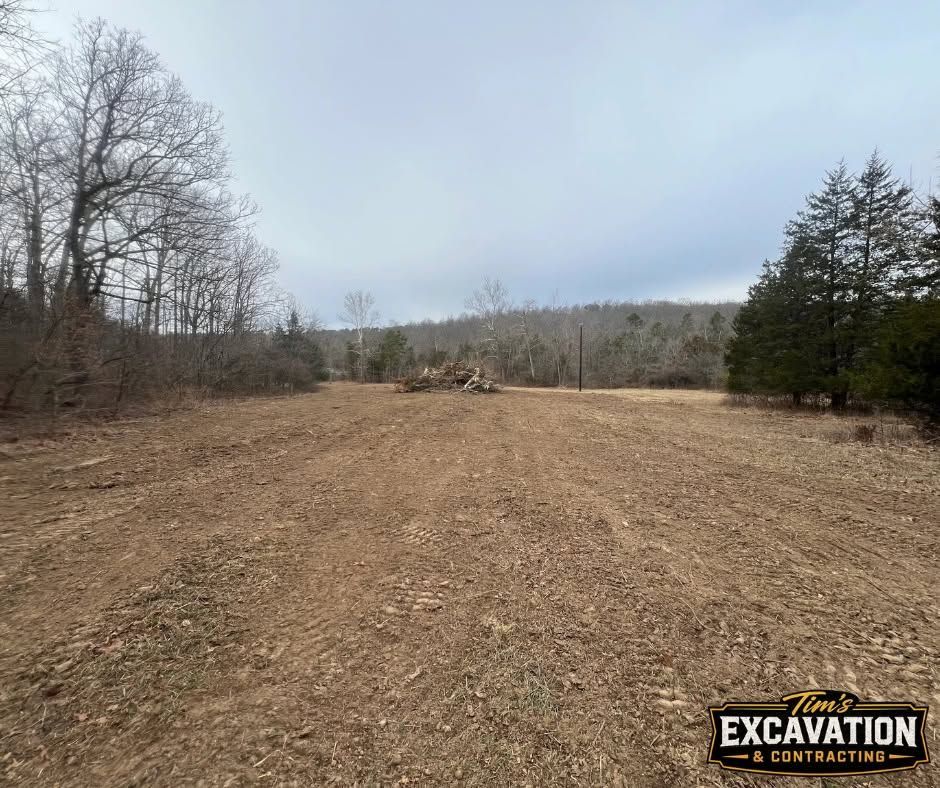
Clearing exposes the true ground surface, revealing rock outcroppings and natural water flow paths critical for foundation and driveway placement.
Selective clearing creates defined building or access areas while preserving vegetated zones to control runoff. For full clearing, stumps are ground or removed, debris is hauled away, and the land is reset to a clean slate ready for grading.
Scheduling clearing during dry seasonal windows prevents equipment rutting, protects soil structure, and ensures a clean site for the next phase.
Common Questions About This Service
Land clearing questions often focus on how much to remove, what the process involves, and how to avoid creating bigger problems than the overgrowth itself.
What's the difference between selective clearing and full clearing?
Selective clearing removes specific trees and brush while preserving root structures on slopes to prevent erosion. Full clearing removes all vegetation, stumps, and surface debris down to bare earth for new construction.
How does clearing on a sloped lot differ from flat ground?
Sloped properties require careful sequencing. Removing too much vegetation at once can destabilize hillsides and cause washouts during heavy Missouri rains.
Why do some cleared properties erode while others stay stable?
Erosion occurs when clearing ignores natural water paths. Leaving strategic buffer zones and properly grading the terrain after clearing keeps topsoil intact and manages runoff effectively.
What happens to the debris after clearing?
Brush is chipped or hauled off, usable timber can be processed, and stumps are removed or ground below grade, leaving a clean, usable footprint.
When is the best time to schedule land clearing in Missouri?
Late summer and fall offer dry ground conditions that reduce soil compaction and give you a clear view of the terrain before finalizing building plans.